A mid-rise residential project on Rincon Hill recently exposed a familiar challenge: dense Colma Formation sands overlying softer, compressible Bay Mud at depth. The structural engineer needed more than a standard bearing capacity report; the site demanded a comprehensive soil mechanics study to model settlement under seismic loading. In San Francisco, where Franciscan Complex bedrock meets young estuarine deposits across a single city block, the interaction between foundation elements and the subsurface is rarely straightforward. Our geotechnical team approaches each San Francisco assignment by first reconstructing the depositional history of the site, because the difference between a dune sand and an artificial fill placed after the 1906 earthquake can dictate the entire foundation strategy.
San Francisco's subsurface is a tectonic mosaic: a soil mechanics study must read the rock record and the seismic signal simultaneously.
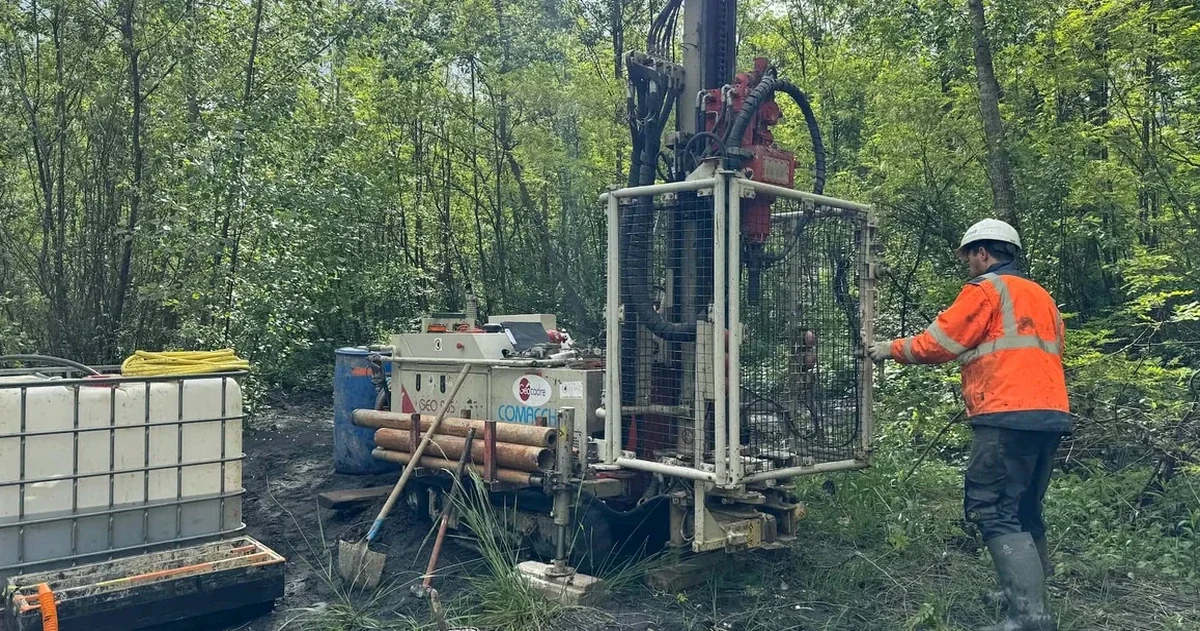
Scope of work in San Francisco
Critical ground factors in San Francisco
The San Francisco Building Code, which adopts and amends the IBC with local geologic hazard provisions, mandates a site-specific soil mechanics study for any structure classified as Risk Category III or IV, and strongly recommends it for substantial Category II buildings. The city's seismic design criteria are among the most stringent in the United States, reflecting the proximity of the San Andreas and Hayward faults. Overlooking the dynamic properties of a saturated sand layer beneath a proposed foundation in the Marina District or South of Market can result in a catastrophic loss of shear strength during strong ground motion — a phenomenon witnessed firsthand in the 1989 Loma Prieta earthquake. A properly executed soil mechanics study, grounded in ASTM D1586 for field exploration and ASTM D2487 for soil classification, provides the numerical parameters that structural engineers need to design liquefaction-resistant foundations and comply with ASCE 7 load combinations.
Our services
We tailor our geotechnical investigation programs to the specific soil mechanics challenges that San Francisco projects present. Each service package is designed by a California-licensed engineer after a thorough review of USGS geologic quadrangle maps and available historical site data.
Comprehensive Site Investigation
We design and execute drilling and sampling plans that target the critical layers identified in preliminary geologic research. Our field crews log boreholes using the Unified Soil Classification System (ASTM D2487) and recover undisturbed samples of Bay Mud and sensitive clays for advanced laboratory testing.
Static and Dynamic Laboratory Testing
The program typically includes unconsolidated-undrained (UU) and consolidated-undrained (CIUC) triaxial tests to define the Mohr-Coulomb failure envelope. We add cyclic simple shear testing when the soil mechanics study must quantify the cyclic resistance ratio (CRR) of potentially liquefiable deposits.
Foundation Analysis and Settlement Prediction
Using parameters derived from the soil mechanics study, we compute immediate and consolidation settlements under the expected structural loads. For deep foundations bearing in the Colma or Merced formations, we provide skin friction and end-bearing values calibrated against published case histories from the Bay Area.
Top questions
What distinguishes a full soil mechanics study from a standard geotechnical report in San Francisco?
A standard report often focuses on descriptive logging and prescriptive foundation recommendations. A soil mechanics study goes further by quantifying the constitutive behavior of each stratum: we measure stiffness, strength, compressibility, and hydraulic conductivity through laboratory testing programs. This data supports numerical modeling, deformation analysis, and performance-based seismic design, which are increasingly required for complex San Francisco structures.
How long does a typical soil mechanics study take for a San Francisco site?
Fieldwork for a medium-sized commercial lot usually takes one to two weeks, depending on access restrictions and traffic coordination. The laboratory testing phase adds another four to six weeks, as consolidation and triaxial tests require specimen saturation and slow shearing stages. The final interpretive report, signed by a California Professional Engineer, is typically delivered eight to ten weeks after the field program concludes.
What is the approximate budget range for a soil mechanics study in San Francisco?
For a typical infill project in the city, the complete soil mechanics study — covering drilling, sampling, laboratory testing (triaxial, consolidation, classification, and chemical testing if needed), and the engineering analysis report — ranges from US$2,720 to US$5,090. The final figure depends on the number of borings, the depth of exploration required to reach competent bearing strata, and the complexity of the laboratory program requested by the structural engineer.
Do you test for soil liquefaction potential as part of the soil mechanics study?
Yes, liquefaction assessment is standard for any San Francisco project located within a mapped liquefaction hazard zone. We use SPT-based empirical procedures (following the NCEER workshop recommendations) and, when the budget permits, cyclic triaxial or cyclic direct simple shear tests. The analysis provides the factor of safety against liquefaction and estimates of post-earthquake settlement and lateral spreading displacement.
How does the presence of serpentinite bedrock affect the soil mechanics study?
Serpentinite, common in the Presidio, Hunters Point, and Potrero Hill, weathers into a soil with unusually low strength and high plasticity. Standard correlations between SPT blow count and friction angle can overestimate the material's capacity. Our protocol includes mineralogical identification and multi-stage triaxial tests to define the residual shear strength, which is critical for evaluating slope stability and deep excavation performance in these areas.