San Francisco is not a city that forgives assumptions. We have seen projects on Folsom Street where dewatering triggers settlement 30 feet away within 48 hours. The fill that underlies much of the Financial District, combined with the Franciscan Complex bedrock at variable depth, creates a monitoring environment where a single missed reading can cascade into a costly shutdown. Our team runs real-time geotechnical excavation monitoring across the city—from the Marina District to South of Market—using inclinometers, piezometers, and total stations tied to a central data logger. When you are cutting 40 feet down next to a historic unreinforced masonry building, the retaining walls design is only half the battle; the instrumentation plan determines whether the adjacent structure stays crack-free. We also coordinate with the deep excavations contractor to set threshold alerts that actually match the soil behavior we see in the Bay Mud.
In San Francisco, the instrument that saves you isn't the one you planned to install—it's the one you added because the bore log showed something unexpected.
Scope of work in San Francisco
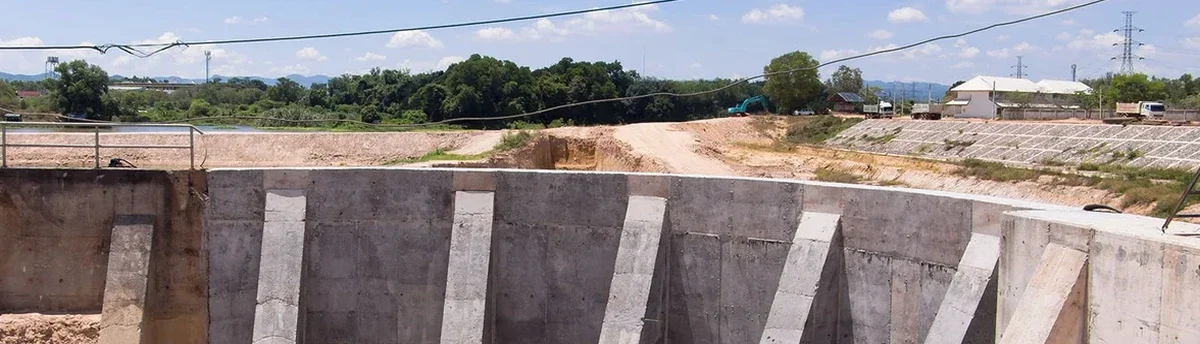
Critical ground factors in San Francisco
ASCE 7 and the local San Francisco Building Code place specific performance requirements on excavation support systems, particularly in seismic zones. The risk that drives our monitoring approach is differential settlement under dynamic loading. During the 1989 Loma Prieta event, several deep excavations in the Marina District experienced lateral spreading that would have been detectable days earlier with proper inclinometer arrays. Today, we set deformation thresholds at 50% of the calculated design capacity, not 80%. This means the project team gets an alert while there is still time to install additional bracing or revise the dewatering sequence. The cost of ignoring a trend line for 24 hours in saturated Bay Mud can exceed the entire geotechnical excavation monitoring budget for the project. We have seen it happen on Kearny Street, and the repair bill ran into six figures.
Our services
Our geotechnical excavation monitoring scope in San Francisco is designed to provide the project team with actionable data, not just a weekly PDF report. We configure each system around the specific risk profile of the site.
Real-Time Inclinometer and Piezometer Networks
We install and maintain automated instrumentation with cloud-based data access. Threshold alerts are tied to shoring design calculations and adjusted as the excavation progresses through different soil units.
Optical Survey and Crack Monitoring
Pre-construction condition surveys, settlement monuments, and crack gauges on adjacent structures. We use digital levels and total stations with closed-loop traverses to control measurement error.
Vibration and Noise Compliance
For sites adjacent to BART, Caltrans infrastructure, or sensitive medical facilities, we deploy seismographs that log peak particle velocity and sound pressure, with immediate notification if limits are approached.
Top questions
How much does geotechnical excavation monitoring cost in San Francisco?
The fee for a typical monitoring program in San Francisco ranges from US$820 to US$2,530 per month, depending on the number of instruments, reading frequency, and whether automated data loggers are required. A simple project with four settlement points and one inclinometer will fall at the lower end; a deep excavation with multiple inclinometer strings, piezometers, and vibration monitors runs higher.
What triggers a stop-work order on a San Francisco excavation?
We set two thresholds: a 'review' level at 50% of the design deformation limit and a 'stop-work' level at 75%. If an inclinometer shows lateral movement exceeding the stop-work threshold, or if a settlement point on an adjacent building drops more than 0.25 inches in 24 hours, the field engineer notifies the contractor and the design team immediately. The city inspector may also issue a stop-work based on visible distress, which is why real-time data is critical.
Do you need monitoring for a shallow excavation under 10 feet?
It depends on proximity. A 10-foot cut on open land with no adjacent structures may not require instrumentation beyond a survey benchmark. But a 10-foot excavation directly next to a 1920s-era unreinforced masonry building in the Mission District absolutely requires tiltmeters and crack gauges. The San Francisco Building Code triggers monitoring requirements based on the zone of influence, not just excavation depth.