The combination of loose saturated sands, shallow groundwater, and the proximity to the San Andreas and Hayward faults makes soil liquefaction a primary geotechnical concern in San Francisco. The city sits on a mix of natural dune sands, artificial fill along the Embarcadero, and young alluvial deposits that are highly susceptible to cyclic mobility during a major seismic event. Our analysis quantifies the factor of safety against liquefaction triggering at each critical depth, using field test data and the simplified procedure outlined in the NCEER/NSF workshops. We deliver site-specific assessments that feed directly into foundation design decisions and seismic retrofit strategies. For sites with marginal safety factors, we explore ground improvement triggers by combining the liquefaction evaluation with vibrocompaction feasibility studies to densify the critical layers before construction begins.
A factor of safety of 1.0 in a Magnitude 7.0 scenario is not enough. We target 1.2 minimum for critical structures per local practice.
Scope of work in San Francisco
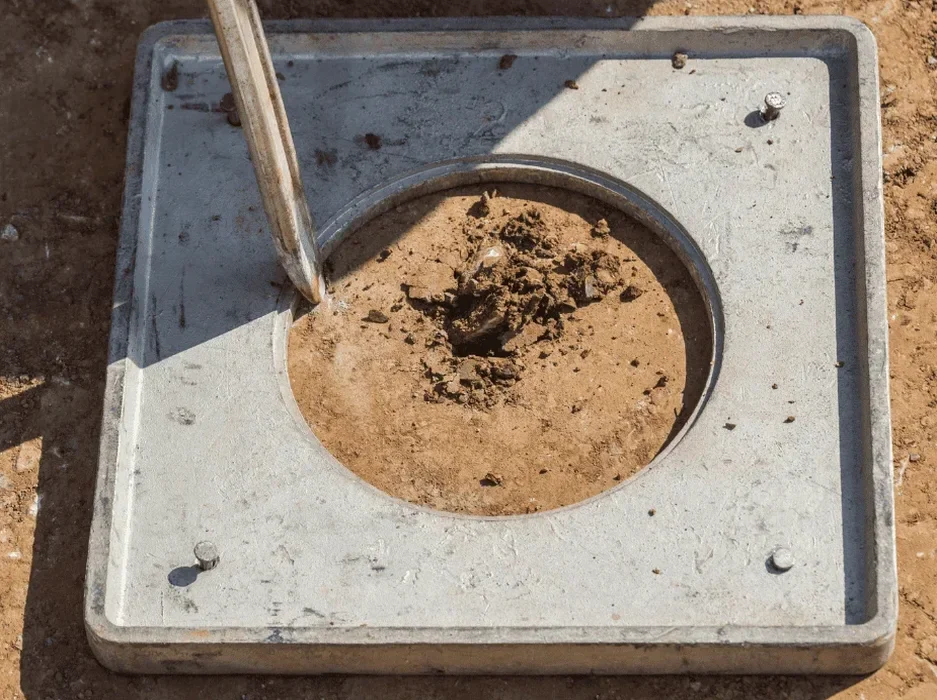
Critical ground factors in San Francisco
ASCE 7-22 Section 11.8 explicitly requires liquefaction assessment for sites in Seismic Design Categories D, E, and F, which covers virtually all of San Francisco. The San Francisco Building Code adopts these provisions wholesale. Skipping the analysis on a site with Holocene alluvium or artificial fill is a direct violation of the locally adopted code. The consequences are not just regulatory. Differential settlement from liquefaction-induced sand boils and lateral spreading can rupture utility lines, tilt foundations, and render a building uninhabitable even if the superstructure survives the shaking. The stone columns technique is one of several ground improvement methods we specify when the calculated post-liquefaction settlement exceeds the project's allowable tolerance, typically 1 inch for spread footings supporting a steel frame.
Our services
We provide three levels of liquefaction assessment tailored to the project phase. All reports include a seismic site class determination and a clear statement of the factor of safety at each explored depth.
SPT-Based Liquefaction Triggering
Standard penetration borings with laboratory index testing. We calculate CRR from (N1)60cs and CSR from the design earthquake. Suitable for buildings up to 240 feet tall.
CPT-Based Continuous Profiling
Seismic cone penetration testing with pore pressure dissipation measurements. We generate a near-continuous factor of safety log, ideal for identifying thin liquefiable seams that SPT intervals might miss.
Post-Liquefaction Settlement & Lateral Spreading
Volumetric strain integration using the Ishihara boundary curves. We map expected vertical settlement and horizontal displacement across the building footprint to inform foundation type selection and slab detailing.
Top questions
What is the cost of a liquefaction analysis for a single-family home in San Francisco?
For a typical single-family lot in San Francisco, a site-specific liquefaction analysis based on one deep boring and laboratory testing ranges from US$2,540 to US$3,670. The final cost depends on access constraints, depth to competent material, and whether we need to install a monitoring well to confirm the groundwater table.
Does the San Francisco Building Code require a liquefaction study?
Yes. The San Francisco Building Code, enforcing ASCE 7-22, mandates a liquefaction potential evaluation for any site classified as Seismic Design Category D or higher. Most of the city, particularly areas underlain by artificial fill, young alluvium, or bay mud, falls into this category.
What is the difference between the SPT-based and CPT-based approach?
The SPT method recovers a physical sample, so we can measure fines content and plasticity directly in the lab. It is the standard for most building projects. The CPT method provides a continuous digital profile without sampling. It detects thin liquefiable layers that a 2.5-foot SPT spoon might miss, but it requires correlation charts to estimate fines content. We often use both. A single CPT sounding calibrates the stratigraphy, and SPT borings provide ground truth samples at key depths.
How deep do you need to evaluate for liquefaction in San Francisco?
We typically evaluate to a depth of 50 to 80 feet below ground surface. Liquefaction rarely occurs below 80 feet because the overburden pressure raises the cyclic resistance beyond the level of seismic demand. The exact termination depth depends on the depth to bedrock or the point where the corrected SPT blow count consistently exceeds 30 blows per foot in clean sand.