A persistent mistake that contractors make on the Peninsula is treating shallow foundation design as a simple bearing capacity exercise—dig down a few feet, pour a wide footing, and call it a day. That approach unravels fast in San Francisco. The city sits on a mosaic of Franciscan Complex bedrock, dense Colma sands, and the notorious artificial fill of the Marina and South of Market districts, all of which behave differently under seismic load. A proper shallow foundation design in San Francisco has to account for differential settlement across these abrupt transitions, not just uniform bearing pressure. When the foundation spans old bay mud and a buried dune ridge on the same lot—common in the Financial District and Embarcadero zones—the structure twists in ways that a generic prescriptive footing cannot handle. The San Francisco Department of Building Inspection enforces the 2022 California Building Code with local amendments that reference ASCE 7-22 for seismic demands, and the geotechnical report must demonstrate compliance before a permit moves forward. Our lab bridges the gap between site investigation and the structural engineer's model, delivering the stiffness parameters and allowable bearing values that reflect actual subsurface conditions. For projects near liquefiable zones, we often pair shallow foundation recommendations with a soil improvement evaluation to reduce post-earthquake settlement risk before the first rebar goes in.
A shallow foundation in San Francisco is a seismic energy filter—design it for bearing alone, and the first moderate Hayward Fault event will expose every settlement compromise in the soil profile.
Scope of work in San Francisco
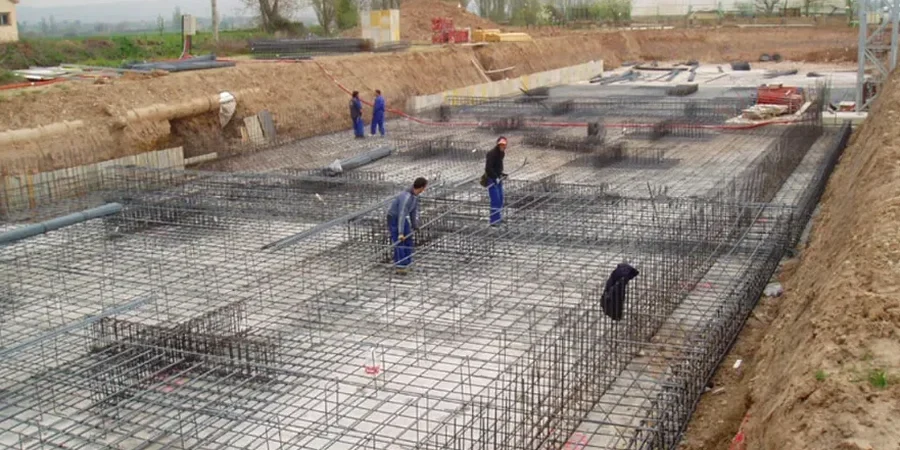
Critical ground factors in San Francisco
The Loma Prieta earthquake in 1989—a magnitude 6.9 event centered 60 miles south of San Francisco—collapsed buildings in the Marina District whose shallow foundations sat on unconsolidated fill that amplified ground motion and liquefied within seconds. The city's population of roughly 808,000 lives and works directly atop this same variable geology, and a repeat of a 1906-scale rupture on the San Andreas would subject thousands of older shallow foundations to accelerations exceeding 0.4g in the soft-soil corridors. The risk resides in the fact that many pre-1970s footings were sized for vertical loads only, with no reinforcement against the overturning moments that a shallow foundation experiences when the ground beneath it oscillates at its natural period. When the footing's rotational stiffness is insufficient, the column base unzips from the soil, and the structure racks beyond its drift limit. A current shallow foundation design in San Francisco cannot ignore the near-fault pulse effects that the USGS seismic hazard model now maps in detail across the Mission and Potrero Hill neighborhoods. Even a modest two-story addition on a mat foundation must be checked for the kinematic interaction between the soil and the structural slab—otherwise, the first M5.5 Hayward creep event produces cosmetic cracking that escalates into a structural repair.
Our services
Shallow foundation design in San Francisco draws on multiple investigation techniques and analysis packages. The four services below represent the core workflow our lab follows from field data collection to the final bearing capacity and settlement report.
Bearing Capacity Analysis
We compute net allowable bearing pressure using site-specific shear strength parameters from triaxial or direct shear tests, applying Meyerhof and Vesic formulations with seismic reduction factors per ASCE 7-22. The report includes both the gross and net pressure, with settlement estimates for immediate and long-term conditions.
Settlement Monitoring and Prediction
Using consolidation tests on undisturbed samples and elastic half-space methods for sands, we forecast total and differential settlement for each footing location. For soft Bay Mud profiles, we model time-rate settlement curves so the structural engineer can sequence construction around primary consolidation windows.
Footing and Mat Foundation Design Parameters
We deliver the modulus of subgrade reaction, Poisson's ratio, and soil spring stiffness values needed for finite element modeling of mat foundations and grade beams. The parameters account for San Francisco's stiff Franciscan bedrock at shallow depth in northern neighborhoods, which alters the foundation's rotational restraint.
Liquefaction Screening for Shallow Foundations
Per the IBC and ASCE 7 trigger methodology, we evaluate the factor of safety against liquefaction at the foundation bearing depth and estimate post-liquefaction reconsolidation settlement. This screening determines whether a shallow foundation is feasible or if ground improvement or deep foundation alternatives must be considered.
Top questions
How much does a shallow foundation design report cost in San Francisco?
For a typical single-family residential or small commercial project in San Francisco, the geotechnical investigation and shallow foundation design report generally ranges from US$1.790 to US$3.380. The final cost depends on the number of borings, laboratory testing complexity (consolidation, triaxial, or simple index tests), and whether the site falls within a liquefaction hazard zone that requires additional screening. Projects with steep slopes or proximity to the Bay margin tend toward the upper end of the range due to the added analysis for lateral spreading and slope stability.
What is the minimum footing depth required by the San Francisco Building Code?
The San Francisco Building Code, which adopts IBC Section 1809.4 with local amendments, requires a minimum footing embedment of 12 inches below the adjacent finished grade. However, this is the absolute minimum—several site conditions demand deeper excavation. Where the upper soils are loose fill or organic Bay Mud, the footing must bear on competent natural soil, which often pushes the embedment to 24 or 36 inches. Expansive clay layers, though less common in San Francisco than in the East Bay, also trigger a deeper minimum to isolate the footing from seasonal moisture fluctuation.
Does a shallow foundation need a liquefaction analysis in San Francisco?
Yes, if the site is mapped within a California Geological Survey Seismic Hazard Zone for liquefaction or if the subsurface investigation reveals saturated loose sands with SPT blow counts below 15 within the upper 50 feet. The analysis follows the simplified procedure in ASCE 7-22, comparing the cyclic stress ratio from the design earthquake to the cyclic resistance ratio of the soil. If the factor of safety drops below 1.1, the shallow foundation design must either include ground improvement measures or switch to a deep foundation system that bypasses the liquefiable layer.